onsdag 22. august 2012

Juv-1w caspian gull Fredrikstad

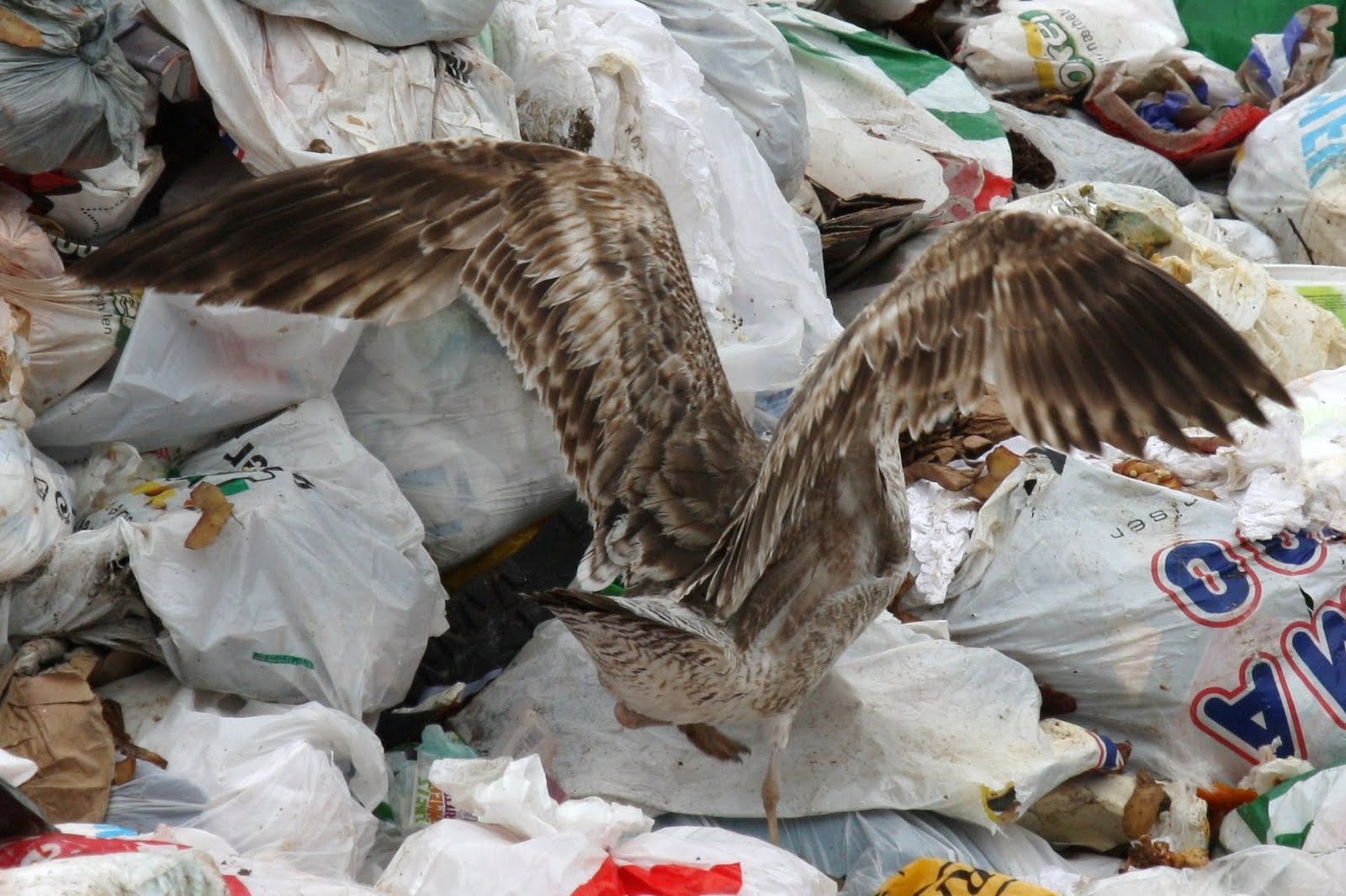
This nice caspian gull in almost full juvenile plumage suddenly appeared before me at Øra, Fredrikstad in the afternoon of monday 20th of august. I have been searching for one for years, so this was nice...

While first winter caspians are very contrasting and therefore easy to discover and straight forward to identify, juveniles are much more nondescript and requires a bit more attention to build and proportions. Roughly speaking, you take a herring gull and stretch and pull all extremities hard in all directions to get the caspian build. They are slimmer, longer winged, longer legged, longer billed and longer necked than an average herring gull, and it takes a very special herring gull indeed (probably in very bad health) to match one.

This bird is not entirely juvenile, though. It has renewed quite a few mantle feathers and scapulars, but these are rather diffusely patterned and do not contrast very much with the older, juvenile feathers.

I have added almost every photo (albeit of variable quality) I managed to get of the bird...Click for (slightly) larger version.


Rather similar to a juv lesser black backed gull, but upper parts with more of a cinnamon  colour than LBBGs which are usually more chocolate brown.

Note the long wings with very narrow and pointed primaries, on swimming birds reminiscent of a pair of scissors. See also flight shots.
 With two very different juv great black backed gulls...
 Almost like a big-nosed phalarope when swimming on the water...

Long legs and very slender body, pear shaped head, long slender bill. On average much lighter underwings than herring gulls as can be noted in this picture.
Wing bar created by darker bases to greater coverts, inner primaries with light restricted to inner webs creating venetian blind effect and much less obvious primary window than herring.

 Lighter underwing than most herrings, but this individual is not extreme in this respect.


 On last three pics: note again venetian blind effect and wing bar.

 Next four pictures: Very typical slender body and "thumbnails "tertial markings


 At rest a  bit more squarish head shape.


tirsdag 25. oktober 2011

2cy Caspian Gull in Mandal harbour

This beauty was discovered by Thomas Bentsen in Mandal harbour 25.10.2011. At the very same spot as he found this 3cy Caspian Gull 19.03.2010! A striking and quite typical individual.


tirsdag 16. august 2011

Yellow-legged gull in Mandal


Well, it's about time something happened on this, the least updated blog in Europe...

Inge has done it again. Today, he searched for a 1cy caspian gull, which he found yesterday (but unfortunately didn't get photos of), when he discovered this fine 1cy yellow-legged gull. It is a small bird, so most probably it is a female.

It shares many of the features seen on "JOHN", the bird ringed almost a year ago at the same spot. I therefore refer to the blog-entry on JOHN for identification clues. This bird is not as advanced as JOHN (no immediately visible 2. gen feathers), but note the wear in the tertials, coverts and scapulars. This is an important feature that separates it from similar looking native lesser black backed gulls (and herrings). These have immaculate fresh plumages at this time up here.


All photos: Inge Flesjå


SEN

fredag 29. oktober 2010

4cy Caspian gull in Fredrikstad


The strong southerlies and horrendous weather the last couple of days tempted me to go and check the gulls today - it's almost three weeks since I last checked them out. Most rare gull observations up here have coincided with similar weather conditions, and Øra outside Fredrikstad is usually the place to go. Øra was a disappointment, though, with most gulls on unobservable roofs or far out in the estuary. On my way back, I checked some flooded fields and was, to my big surprise, awarded with a 4cy caspian gull! Caspian gulls older than 2cy are terribly rare in Norway, so this was a treat!

Note that the "head streaking" is confined to the lower neck and is very weak - like thin, weak, aquarelle streaks - as opposed to the heavy blotching in most herring gulls. In caspian gulls, this is also an indication that the bird is a 4cy. Fully adults usually have completely white heads.
When confronted with a typical, long billed individual like this, I couldn't stop the mind from wandering to Monthy Pythons legendary "Life of Brian" and the the "Big-nose" scene...


Adult, or near adult caspian gulls (or herrings/yellow legged gulls) should always walk around with a hanging wing like this individual. The hanging wing exposes the crucial P5 - normally hidden under the tertials. Here it is very obvious that P5 has a complete black band on this feather. Most herring gulls have only a black mark on the outer web on this feather, but complete black banded individuals are not very rare...

In flight, note the complete black band on P5, the white slivers on the upper hand, the long light tongues eating into the black on the underside of the outer primaries and that P10 has a subterminal band separating the white tip from the mirror - indicating that the bird is a 4cy.
From below, the black in the hand of an adult or near adult caspian gull builds a boomerang. It has less black than a herring gull, but is distributed on (on average) more primaries.
See: https://blogger.googleusercontent.com/img/b/R29vZ2xl/AVvXsEhfUg1MQTrQj5Sn7q1gZ00Uf_Xtcv1-pfazgaftWwPzytFFb0aWTdgXA8K0htNc_MM2UnxBpJo7Q_Rez5izGtAmn1lQWMB2TK_Wsp5dKHONCFKZGFj4NqatdJ8WwVrlbdLpDHT1mAb5yFQ/s1600/vingesammenlign.jpg